Not long ago, finding available industrial space in Saint-Laurent or Laval meant moving fast, competing hard, and paying whatever the market demanded. Vacancy rates across Greater Montreal had bottomed out at just 1.4% in 2021 — effectively no room to move. That market is gone. Today, industrial vacancy in the Montreal area sits above 7%, with Saint-Laurent and Laval among the most affected submarkets. Asking rents have softened. Older properties are sitting on the market longer. And for the first time in years, buyers and investors have leverage. If you’ve been waiting for the right moment to secure industrial space in two of Montreal’s most strategically connected corridors, this is the environment you’ve been waiting for — but it may not last as long as you think.
How the Montreal Industrial Market Got Here To understand the opportunity in front of us, it helps to know how quickly things changed. During the pandemic years, demand for industrial and logistics space surged across North America. E-commerce growth, supply chain restructuring, and a scramble for local warehousing pushed vacancy rates to historic lows. In Greater Montreal, that number bottomed at 1.4% in 2021 — a level that gave landlords almost total control of the market. Rents climbed. Competition for available units was fierce. For business owners who needed space, options were limited and timelines were tight. Then the market shifted. New supply entered as developers responded to strong demand. Absorption slowed as businesses, facing rising costs and economic uncertainty, became more cautious about expanding footprints. The result has been a steady climb in availability — seven consecutive quarters of negative net absorption in the Greater Montreal Area, with the industrial vacancy rate now sitting above 7%. Rental rates, which peaked during the tight market, have settled into a range of $13 to $14 per square foot — and have held there for nearly a year, signalling that the market is searching for a floor rather than continuing to fall.
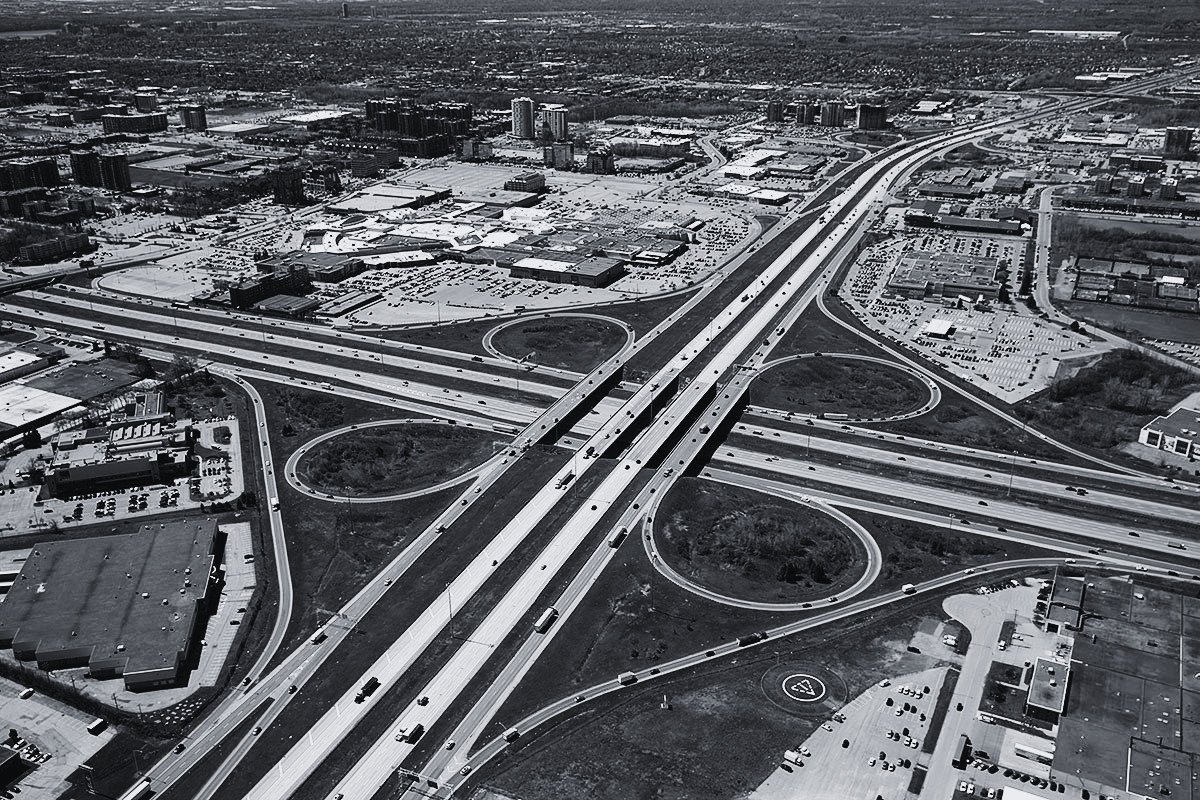
What’s Happening in Saint-Laurent Right Now Saint-Laurent has long been one of Montreal’s most important industrial addresses. The borough sits at the crossroads of Autoroutes 13, 15, and 40 and is minutes from Montréal-Trudeau International Airport — a combination that makes it a natural home for logistics, light manufacturing, and aerospace-related industries. Companies like CAE and Bombardier have deep roots here, and the cluster of suppliers and service providers around them has built a dense, well-connected industrial ecosystem. In the current cycle, Saint-Laurent is seeing new supply enter the market, with approximately 175,000 square feet across two new buildings expected for delivery in 2026. Combined with softer overall demand, this is contributing to higher availability in the submarket. For buyers, that means more choice — including properties that have been on the market long enough that sellers are genuinely motivated to negotiate. A significant portion of available inventory in Saint-Laurent is older industrial stock. These are buildings that were developed decades ago and haven’t been updated to modern specifications. They tend to carry lower ceiling heights, older electrical systems, and layouts that don’t match the requirements of today’s logistics operations out of the box. But they also come at a meaningful discount — and for buyers willing to put capital into a renovation, they represent a genuine value-add opportunity in a submarket with very strong long-term fundamentals.
What’s Happening in Laval Right Now Laval tells a slightly different story — and in many ways, an even more compelling one for buyers. The island of Laval sits directly north of Montreal, connected by Autoroutes 15, 440, and 25. It has grown significantly as an industrial market over the past decade, attracting businesses that want strong highway access without the congestion and cost of doing business on the island of Montreal. Industrial parks in Laval continue to draw tenants from across the region. In 2025, Laval recorded positive net absorption of approximately 647,000 square feet — meaning more space was leased or purchased than was vacated. That’s a strong signal that underlying demand is real. At the same time, vacancy in Laval has climbed by around 360 basis points year over year, one of the largest increases in the Greater Montreal Area. New supply is part of the equation: around 500,000 square feet across two new buildings are under construction in Laval for 2026 delivery. The result is a submarket where demand exists but supply has temporarily outpaced it — which is exactly the environment where buyers find the best pricing. Sellers who need to move older properties are competing against new product. That’s leverage for you.
The Case for Buying Older Industrial Stock The phrase "older stock" can sound like a warning. In this market, it’s better understood as an opportunity. Older industrial buildings in Saint-Laurent and Laval were built for a different era of manufacturing and warehousing. They typically feature lower clear heights (often under 22 feet), limited dock doors, and mechanical and electrical systems that need updating. Modern logistics tenants and owner-operators tend to pass on them in favour of newer, purpose-built space. That selectivity creates pricing gaps — and pricing gaps create opportunity. For a business owner who needs industrial space and has been leasing for years, purchasing an older building and renovating it to fit your specific operations can make strong financial sense. You stop building equity for a landlord and start building it for yourself. The renovation cost is a one-time capital event; the long-term savings and asset appreciation work in your favour over time. For an investor, the value-add model is straightforward: acquire at a discount that reflects the building’s current condition, renovate to modern or near-modern specs, and either lease to a quality tenant or sell into a tighter future market. The risk is real — renovations cost money and take time — but the discount pricing available today is pricing that reflects those risks fairly.
Is 2026 the Right Time to Move? The honest answer is: probably yes, but the window is finite. The current conditions — elevated vacancy, softened rents, motivated sellers, older stock priced to reflect its condition — are the product of a specific moment in the cycle. Multiple research firms and market analysts are pointing to 2027 as the year when Montreal’s industrial market is expected to tighten again. New supply currently under construction will be absorbed. Demand from logistics, manufacturing, and distribution users continues to grow. And as the broader economy stabilizes, businesses that have been delaying space decisions will start to act. When that happens, the leverage buyers have today will compress. Pricing will firm up. The negotiating room on older stock will shrink. That doesn’t mean rushing into a bad deal. It means that if you have been thinking about acquiring industrial space in Saint-Laurent or Laval — to operate from or to hold as an investment — the current environment is one of the most favourable buying conditions this region has seen in several years. Acting thoughtfully in 2026 puts you ahead of the next cycle.
The Saint-Laurent and Laval industrial markets are in transition. Vacancy has risen, rents have softened, and a real inventory of motivated sellers has emerged — including older buildings that need work but are priced to reflect it. For buyers and investors who understand the fundamentals of these corridors, that’s not a problem. It’s a setup. The market is expected to tighten again in 2027. The buyers who benefit most from that shift will be the ones who move in 2026. If you’d like to talk through what’s available, what it realistically costs to renovate, or whether ownership makes sense for your situation, I’m happy to have that conversation.